How can students be actively engaged in transition planning?
Page 4: Transition Assessments and Postsecondary Goals
 A primary component of the individualized transition plan is the student’s postsecondary goals—long-term, measurable goals that the student will achieve after high school. These goals address three primary areas:
- Education and training
- Employment
- Community engagement and independent living, if necessary
As a part of person-centered transition planning, students play an active role in creating their own postsecondary goals. As a result, those goals become more meaningful and are more likely to be achieved. Such goals should be informed by a variety of transition assessment data and aligned with annual goals in the student’s IEP. This allows students to build the skills they will need for future success.
Transition Assessments
Transition assessments provide information about the student’s present strengths, needs, preferences, and interests. These assessments also help to identify what skills the student will require to be successful in future environments, such as a college or university or a place of employment. Ideally, assessments should be completed by multiple informants (e.g., students, teachers, parents) and in an ongoing fashion so as to capture any relevant changes over time.
Age-appropriate formal and informal assessments provide data that guide the transition planning process. Formal assessments are standardized and typically result in a score that can be interpreted by a professional (e.g., teacher, school psychologist). Informal assessments are often less structured and can be collected from many different people on the student’s IEP team (e.g., student, parent, teacher). The table below provides examples of formal and informal transition assessment measures.
| Formal Transition Assessments | Informal Transition Assessments |
|
|
career aptitude test
glossary
adaptive behavior
glossary
curriculum-based measurement (CBM)
glossary
To build students’ self-determination skills and to more intentionally involve them in the transition assessment process, educators can use one or more of the following methods:
Because the purpose behind transition assessments is not always immediately clear to the student, educators should discuss the assessment plan in a way that is appropriate for the student’s level of understanding. More specifically, educators can:
- Explain different assessment options and the information that these assessments will provide
- Help students understand how the information that the assessments provide (e.g., strengths, preferences, needs) connect to their career, educational, or independent living goals
- Invite students to choose areas to evaluate (e.g., academics, career aptitude, self-determination) that will help them better understand their strengths, preferences, interests, and needs
When the student understands the purpose and goals of assessment, they are more likely to be invested in the process.
Interviews are a structured way to obtain student input. Because interviews are a type of informal assessment, educators can be flexible with how the interview is conducted and can individualize the questions for each student. Educators might ask the student questions about their talents, interests, and aspirations and record their answers to inform transition planning.
By conducting interviews, students have the opportunity to practice their communication skills in a familiar context and with familiar people. The student can learn more about how others perceive their strengths and needs by interviewing family members, teachers, or other important people in their life (e.g., coaches, friends, faith community members). It is often beneficial for the student to identify similarities and differences between their own interview responses and the answers provided by others. Both commonalities and discrepancies can be used to focus discussions during the IEP meeting.
Below, Kelly Smoak describes how she uses transition assessments (time: 1:33).

Kelly Smoak, MEd
Resource Teacher & Department Chair,
Middle School
Transcript: Kelly Smoak, MEd
When we are in class, we do a number of assessments through interest inventories, inventories that we have, pencil and paper we pass out in the classroom. We may also do some assessments online. Gathering that information, we come back after it’s done the next class period and really go over it with the kids independently, maybe in a group setting with a couple of students, and they can share their information with one another, gives them an opportunity to discuss what they like with their peers or what they found out about themselves with their peers. It also allows me to walk around and engage with them and find out how they’re assessing themselves.
They have Google Docs, and we have a bank of all of their information. It has a copy of their IEP. Anything that we do that is related to building on that IEP, we have them save it in that file so they can pull that back up when it’s time for the IEP, to prepare for it. I’ll pull them aside independently, and I’ll have them pull that up and say, “Let’s go back and look at what your results were from your various assessments throughout the year. Let’s see what your interests are.” And then it’s more of an independent time, just a casual conversation with the student, and that’s when we begin to talk about how that fits into the IEP.
Transition Goals
For Your Information
Exposing a student to new environments (e.g., a college campus, a potential job site) and activities (e.g., a cooking class, job shadowing, internships) can help them build a better understanding of their preferences and interests. These experiences will often confirm the student’s goals, but sometimes they will cause them to change their mind. Such authentic opportunities can be critical for helping students refine their postsecondary goals.
When the results of the transition assessments are available, the educator and student should meet to discuss and plan for next steps. Though the relative depth of this review process will depend on the individual student, it is nevertheless important for students to see and understand their assessment results. This is a good time to reiterate how these results can inform their postsecondary goals.
After the student’s postsecondary goals have been identified, the IEP team works together to develop corresponding annual IEP goals. These annual goals should address the prerequisite knowledge and skills that the student must master during high school to reach their postsecondary goals. Additionally, they will identify the transition services (e.g., specially designed instruction, related services, community experiences) that are necessary to help the student achieve those goals. The student can be involved throughout this process by sharing their preferences, brainstorming ideas, or suggesting changes to others’ recommendations.
specially designed instruction (SDI)
glossary
related services
glossary
In the interview below, Jim Martin discusses the importance of transition assessments in relation to developing goals. Next, Erik Carter briefly discusses how postsecondary goals differ from, but should relate to, annual IEP goals.
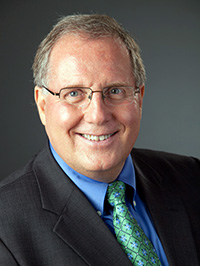
Jim Martin, PhD
Professor Emeritus
Department of Educational Psychology
University of Oklahoma
(time: 1:56)
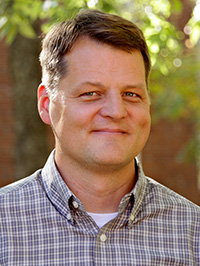
Erik Carter, PhD
Executive Director, Baylor Center
for Disability and Flourishing
Baylor University
(time: 1:05)
Transcript: Jim Martin, PhD
Transition assessments have really helped get transition education more focused. We have a battery of transition assessments we have to do, and one of them has to be a formal assessment, meaning that it’s a standardized assessment that has adequate psychometric properties that we know is a good assessment to help students plan for their life after high school. That sets the tone and gets the boat going in the right direction. But the engine that really drives the motor to get the boat going are the annual transition goals. And we now know that there’s a set of generalizable behaviors. They’re nonacademic skills that when students learn these behaviors, it increases their likelihood of postsecondary education or postsecondary employment. So as we assess students, we need to focus on assessments that will look at these generalizable nonacademic behaviors; establish our strengths and needs using those assessments; and then, based on the needs, develop annual transition goals to ensure that we teach students those generalizable nonacademic behaviors, like student involvement in their IEP meetings, disability awareness, interacting with others, knowledge of strengths or limitations. When they learn those generalizable, critical nonacademic skills, it will help them attain whatever their ultimate goals are. That’s probably the most important thing we can do in transition, is to teach kids those generalizable nonacademic skills.
Transcript: Erik Carter, PhD
Annual IEP goals and transition goals are different in a number of ways. One is primarily their time horizon. Postsecondary goals are really those that focus on life after graduation, and they’re also outcome focused. What is it that the student will do in the early years after leaving high school? Where will they work? Where will they live? Where will they go to school? They address areas like future training, future education, and future employment, and future independent living. And they also are required to be based on age-appropriate transition assessments, which is a little bit different than the requirements for annual goals. Annual goals have a much shorter time horizon, and they’re really focused on what happens in the upcoming school year. They have a shorter time focus.
If you’ve done a transition plan well, you should have annual IEP goals that link to and lead to those post-school transition goals. They’re connected in that way, that each year of progress you make on an annual goal should be moving you closer towards attaining that post-school goal or preparing you for that post-school goal.
High-Leverage Practices
 High-leverage practices (HLPs), developed by CEEDAR and the Council for Exceptional Children (CEC), are essential special education techniques that all teachers of students with disabilities should master for use across a variety of classroom contexts. The information on this page aligns with the following HLPs.
HLP 4: Use multiple sources of information to develop a comprehensive understanding of a student’s strengths and needs.
HLP 5: Interpret and communicate assessment information to collaboratively design and implement educational programs.
HLP 6: Use student assessment data, analyze instructional practices, and make necessary adjustments that improve student outcomes.
HLP 11: Identify and prioritize long- and short-term learning goals.
Returning to the Challenge
Before Nia’s and Jeremy’s next IEP meetings, Mr. Longoria works with both of them to conduct transition assessments and develop potential transition goals. Select each student’s photo to review a summary of their assessment data and results, as well as their postsecondary and annual goals.


Nia
Nia, along with other IEP team members, collects assessment data using multiple tools:
- Interest inventory
- Career aptitude test
- Teacher-conducted interview with Nia
- Student-conducted interview with Mr. Longoria
- Student-conducted interview with Nia’s grandmother
- Classroom observation
- Work observation
- On-the-job evaluation
Combined, these data offer a picture of Nia’s strengths and areas of need:
- Strengths: Organized, follows directions well, dependable (e.g., arrives at work on time, requests time off in advance), performs cashier responsibilities accurately, pays attention to details, works well independently, strong auditory processing skills
- Areas of need: Initiating conversation with customers, being confident in social interactions, following written directions
After meeting to review her transition assessment results, Mr. Longoria and Nia brainstorm some goals for her upcoming IEP meeting. Mr. Longoria points out that if Nia wants to be a fashion designer, she will need to be able to communicate effectively with supervisors, colleagues, and clients. With this in mind, they develop transition goals to propose to the IEP team, including those below.
| Postsecondary goal | After college, Nia will obtain a job as a fashion designer. |
| Annual IEP goal | Within a retail setting, Nia will initiate communication with customers (e.g., ask questions, offer assistance) at a rate of 5 times per hour across 3 consecutive workdays. |
Jeremy
As a freshman who is just getting started with transition planning, Jeremy has not previously participated in transition assessments. Although Jeremy does not conduct any assessments himself, he helps select work samples. His transition assessments include:
- Interest inventory
- Work samples
- Teacher-conducted interview with Jeremy
- Teacher-conducted interview with Jeremy’s mother
- Classroom observation
Combined, these data offer a picture of Jeremy’s strengths and areas of need:
- Strengths: Enjoys social interactions, knowledgeable about animals, skilled with technology, strong memory and recall
- Areas of need: Asking for help, social communication, completing multistep tasks, adapting to changes in routine
Mr. Longoria meets with Jeremy and shares his transition assessment results. Because Jeremy and his mother both indicated a desire for Jeremy to live independently or with roommates in the future, Mr. Longoria suggests developing a goal in this area. Jeremy shares that he is most excited about cooking his own meals as an adult, so they incorporate this into an annual IEP goal.
| Postsecondary goal | After high school, Jeremy will live independently or with minimal support, managing his own daily routines and responsibilities. |
| Annual IEP goal | Given a 3-4 step visual recipe and a list of ingredients, Jeremy will independently complete all steps to prepare a meal or snack (e.g., sandwich, cereal) at least 3 times a week. |

For additional information about content discussed on this page, review the following resources. Please note that these resources are not required readings to complete this module. Links to these resources can be found in the Additional Resources tab on the References, Additional Resources, and Credits page. NTACT:C – Tools and Resources This document offers a compiled list of assessment tools and materials related to transition and self-determination. |
